
Old-Fashioned Bread pudding has never been about impressing anyone. It didn’t come from celebration cakes or bakery windows. It came from practicality, from kitchens where nothing was wasted and warmth mattered more than presentation. Long before it was written down or photographed, bread pudding existed because someone looked at leftover bread and knew it could become something better if treated gently. That spirit is exactly what makes this old-fashioned version endure.
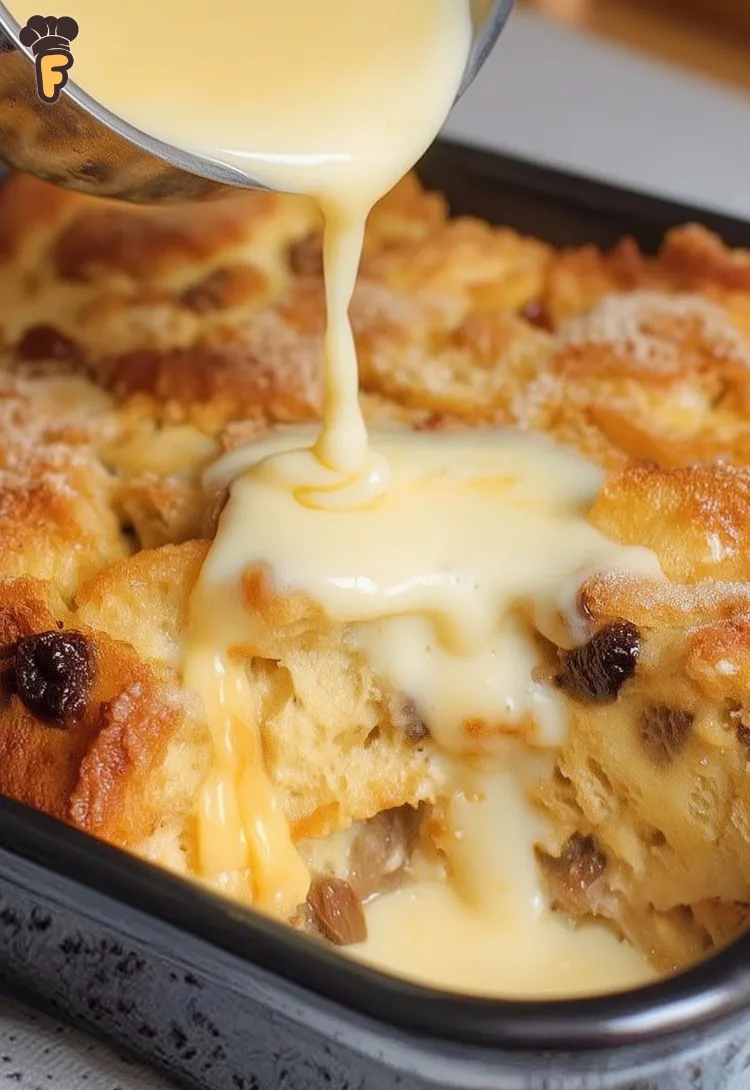
At its heart, bread pudding is simple: bread, milk, eggs, sugar. But the difference between a forgettable pan and one people talk about quietly for years comes down to how those ingredients are handled. Grandma-style bread pudding doesn’t rush. It allows time, warmth, and patience to do the work.
The bread is the foundation, and not all bread behaves the same. Challah and brioche are ideal because they’re already enriched — eggs and butter baked right into their structure. That richness means they absorb custard without collapsing. Day-old bread is non-negotiable. Fresh bread is too soft; it turns pasty before the custard can distribute evenly. Bread that’s had a night to dry slightly acts like a sponge instead of a sponge that’s already soaked.
Cubing the bread rather than tearing it also matters more than most people realize. Clean cuts create consistent edges, which absorb liquid evenly and bake uniformly. Irregular chunks lead to uneven texture — some bites too wet, others dry.
Once the bread is arranged in the dish, the custard comes together quickly: eggs, milk, sugar, melted butter, vanilla, cinnamon, nutmeg. Nothing fancy. Nothing extra. But here’s where the first quiet secret comes in: the custard should be mixed until fully smooth, but never whipped. Incorporating too much air creates a puffier, eggier texture that pulls the dish toward breakfast casserole instead of dessert. Smooth and fluid is the goal — something that pours easily and settles into the bread without bubbles.
After pouring the custard over the bread, it’s tempting to rush straight to the oven. This is where many bread puddings lose their potential. The resting time — those full 30 minutes — is not optional. It allows the custard to migrate fully through every layer of bread, from top to bottom. During this rest, gravity does its work. The top softens, the middle hydrates, and the bottom absorbs just enough liquid to bake tender without becoming soggy.
Skipping this step results in uneven pudding: a dry top, wet bottom, and no cohesion in between. Resting creates unity.
Now for the real secret — the one that separates “good” bread pudding from the kind people remember.
The oven temperature and bake time should aim for set, not firm.
Bread pudding is custard-based, not cake-based. That means it continues to cook after it leaves the oven. Pulling it when the center is just set — no liquid sloshing, but still soft when gently pressed — ensures a creamy interior once it finishes resting. Overbaking dries it out permanently. There’s no fixing it later with sauce or reheating.
Look for golden edges, a lightly bronzed top, and a center that holds but yields slightly. If you wait for it to feel firm, it’s already gone too far.
While the pudding bakes, the vanilla sauce quietly becomes the second half of the dish. This sauce isn’t meant to be thick like frosting or thin like milk. It should coat the back of a spoon — glossy, pourable, and warm. Butter, sugar, brown sugar, and cream melt together slowly, never boiled aggressively. Boiling breaks the emulsion and makes the sauce grainy. Gentle heat keeps it smooth.
Vanilla goes in last, off the heat. This preserves its aroma instead of cooking it away.
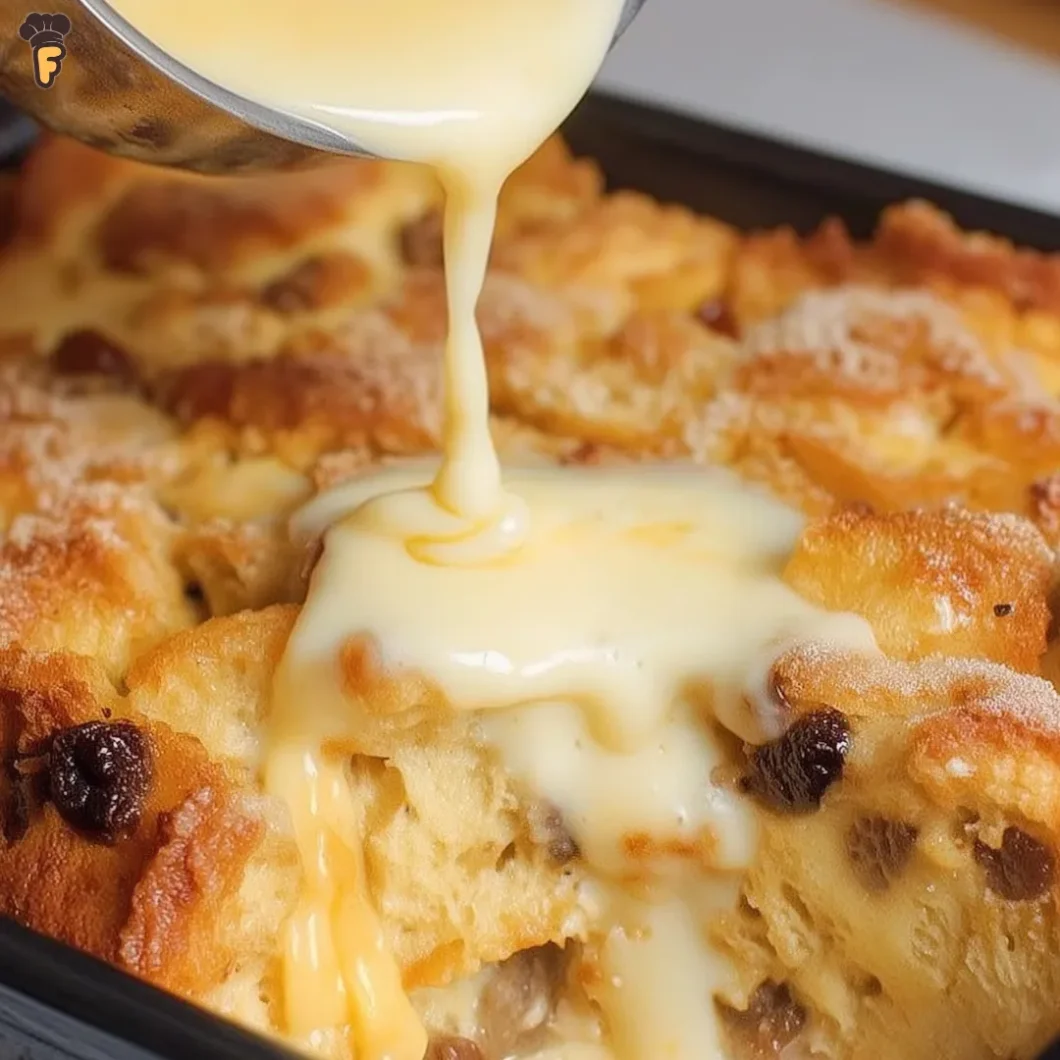
Here’s another understated but powerful detail: the sauce and pudding should meet while both are warm. Pouring warm sauce over warm bread pudding allows it to sink into the surface, pooling in the natural cracks and edges instead of sitting on top. That’s what gives each bite depth — soft custard below, buttery sweetness above, all layered instead of separated.
Bread pudding isn’t meant to be sliced cleanly. It’s meant to be spooned. That’s part of its charm. Clean edges and sharp corners work against it. This dessert is forgiving, generous, and slightly imperfect — exactly why it lasts.
Raisins are optional, and whether they belong is often a family debate. Golden raisins are traditionally used because they’re softer and less assertive than dark raisins. If included, they should be scattered evenly so no single bite dominates. But leaving them out doesn’t make the pudding lesser — it just makes it quieter.
What makes this dessert so enduring is that it adapts without losing itself. Served warm on a cold night, it’s comfort. Served at room temperature the next day, it’s familiarity. It doesn’t demand attention. It waits.
And that’s why it works.
Bread pudding isn’t about novelty. It’s about care — measured not in teaspoons, but in patience. In letting bread soak long enough. In pulling the dish at the right moment. In pouring sauce while it’s still warm.
That’s the kind of cooking that doesn’t fade.
It stays.
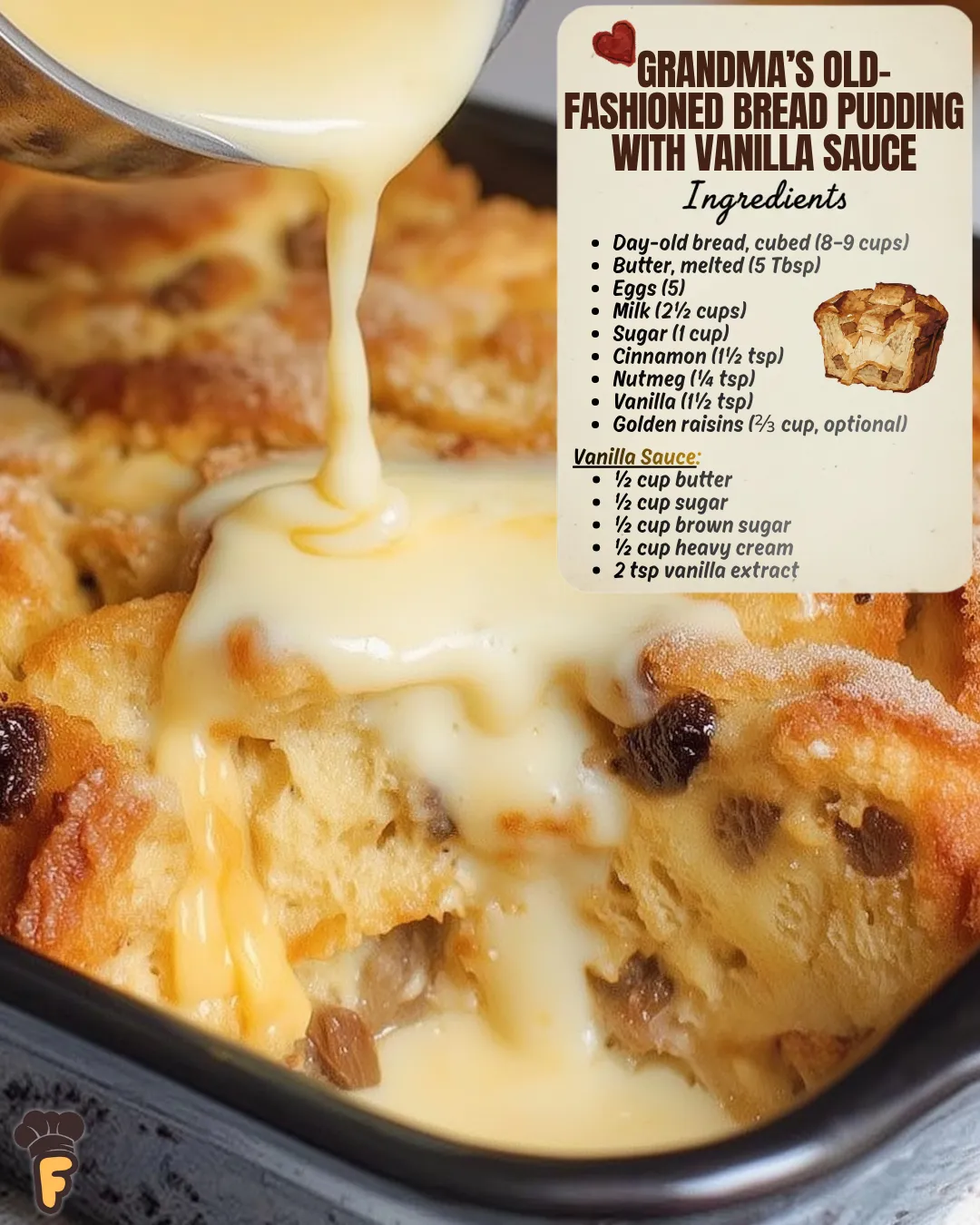
Grandma’s Old-Fashioned Bread Pudding with Vanilla Sauce
Old-fashioned bread pudding made with day-old bread, warm spices, and topped with a rich homemade vanilla sauce. A classic no-waste comfort dessert.

Bread Pudding FAQs
Can I use stale bread for bread pudding?
Yes — stale bread is ideal. Slightly dry bread absorbs custard more evenly and prevents sogginess.
Is bread pudding considered a no waste dessert?
Absolutely. Bread pudding was created specifically to use leftover bread instead of throwing it away, making it one of the original no waste desserts.
Why does my bread pudding turn out dry?
Dry bread pudding is usually overbaked. The center should be just set when removed from the oven. It continues cooking as it rests.
Should bread pudding be soft or firm?
Bread pudding should be soft and custardy, not firm like cake. A gentle jiggle in the center is a good sign.
Do I have to use raisins?
No. Raisins are traditional but optional. Leaving them out does not affect the structure of the pudding.
Can bread pudding be made ahead?
Yes. Bread pudding can be baked ahead and gently reheated. Warm vanilla sauce should be made fresh when possible.